
Departamento de Ingeniería Informática

Usach Leverages AI to Optimize CT Scans and Lower Patient Radiation Exposure

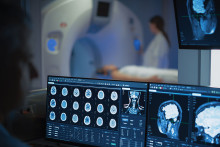
Computed tomography (CT) scans have become an essential tool in modern medicine due to their speed and ability to produce detailed images of bones, organs, and soft tissues, facilitating the timely diagnosis of diseases.

Depending on their radiation dose, CT scans are classified as standard or low-dose. Low-dose CT scans expose the patient to a lower radiation dose during the exam, although they have a significant limitation: they produce images with lower resolution and higher visual noise.
Neuro-Inspired AI: The Path to Sustainable Intelligence

Today's AI advancements, from ChatGPT to facial recognition, rely on massive, energy-intensive data centers that process millions of calculations per second. This model, however, incurs high costs and significant environmental impact, while the ability to further increase AI's processing power is starting to stagnate.

Project to reconstruct CT scans with lower radiation doses

Computed tomography (CT) is currently one of the most widely used techniques to diagnose various diseases for its excellent performance and speed in obtaining images or cross-sections of bones, blood vessels, and soft tissues of the body. It has also become one of the radiological procedures that involves the highest exposure to radiation, equivalent to six months to five years of unprotected exposure to the sun.

Project to reconstruct CT scans with lower radiation doses

Computed tomography (CT) is currently one of the most widely used techniques to diagnose various diseases for its excellent performance and speed in obtaining images or cross-sections of bones, blood vessels, and soft tissues of the body. It has also become one of the radiological procedures that involves the highest exposure to radiation, equivalent to six months to five years of unprotected exposure to the sun.